Advanced-etl-processor
XML Reader
About XML
Extensible Markup Language (XML) is a markup language that defines a set of rules for encoding documents in a format that is both human-readable and machine-readable. It is defined in the XML 1.0 Specification produced by the W3C, and several other related specifications, all gratis open standards.
The design goals of XML emphasize simplicity, generality, and usability over the Internet. It is a textual data format with strong support via Unicode for the languages of the world. Although the design of XML focuses on documents, it is widely used for the representation of arbitrary data structures, for example in web services.
Source: Wikipedia
Properties
Tip: To change Reader properties double click on it.
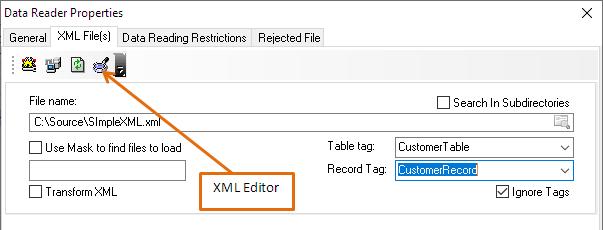
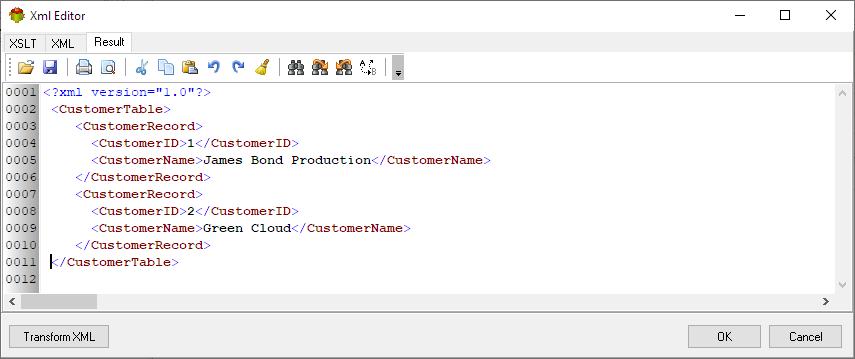
XML Editor
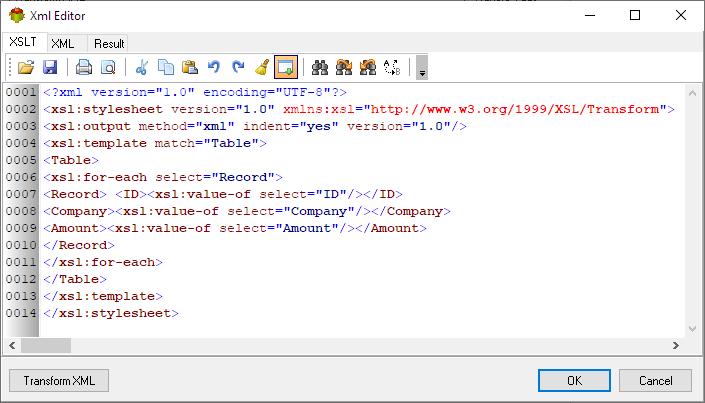
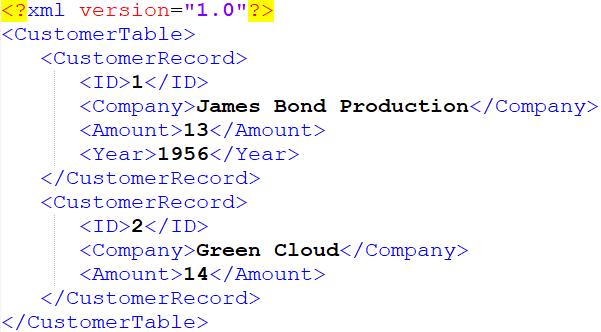
Simple XML file example
Note:
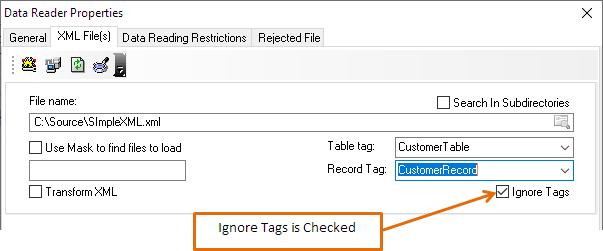
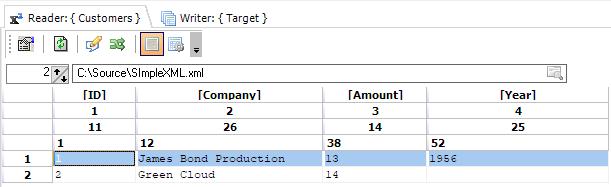
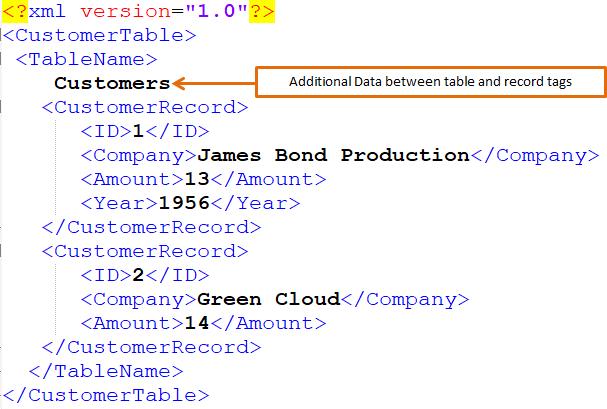
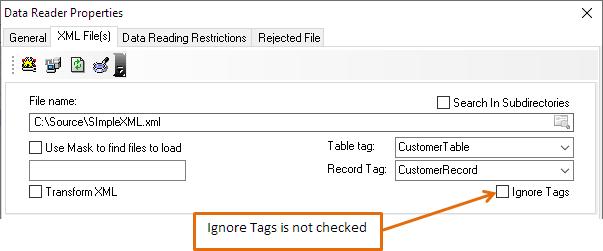
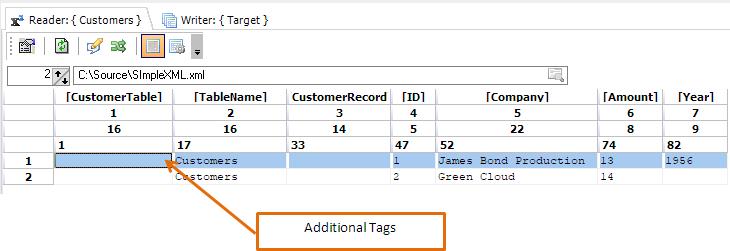
Advanced ETL Processor will also bring in all data between table and row tag if Ignore tags is not checked. For complex XML files it is also possible to apply XSLT transformations (Transform XML Checked)
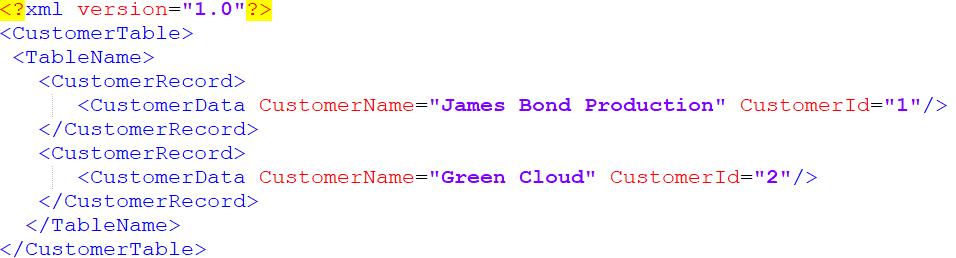
More Complex XML file example
Complex XML file example
XML is very flexible format but the flexibility makes XML difficult to work. For example some xml tags might me missing or be in deferent order. XSLT is used to address this issue
About XSLT
XSLT (Extensible Stylesheet Language Transformations) is a language for transforming XML documents into other XML documents, or other objects such as HTML for web pages, plain text or into XSL Formatting Objects which can then be converted to PDF, PostScript and PNG.
Typically, input documents are XML files, but anything from which the processor can build an XQuery and XPath Data Model can be used, for example relational database tables, or geographical information systems.
Source: Wikipedia
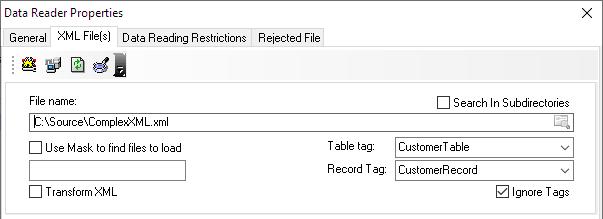
Data Without Transformation
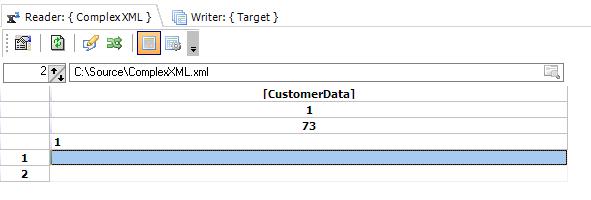
XSLT Transformation
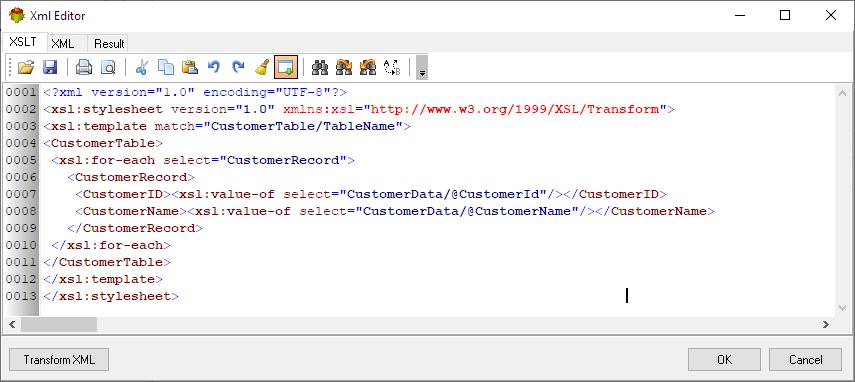
Result of XSLT Transformation
Useful links
Video Tutorials
For more technologies supported by our ETL Software see Advanced ETL Processor Versions
Confused? Ask question on our ETL Forum