Advanced-etl-processor
Mapping Screen Overview
The transformation screen is used to create and modify data transformation processes.
The default transformation consists of a reader, validator, transformer and writer.

Main tool bar

Transformation Toolbar Options
-
Transformation Properties
Opens the properties of the current transformation. -
Notes
Adds or views notes related to the transformation. -
New Transformation
Creates a new transformation. -
Load Transformation from File
Loads a transformation from a file. -
Save Transformation to File
Saves the current transformation to a file. -
Save Transformation Under New Name
Saves the transformation with a new name. -
Save Transformation to Repository
Saves the transformation to the repository. -
Cut
Cuts the selected object. -
Copy
Copies the selected object. -
Paste
Pastes the previously copied or cut object. -
Delete
Deletes the selected object. -
Undo
Reverts the last action. -
Redo
Reapplies the last undone action. -
Align Left
Aligns selected objects to the left. -
Arrange Vertically
Arranges objects in a vertical layout. -
Align Right
Aligns selected objects to the right. -
Align Bottom
Aligns selected objects to the bottom. -
Arrange Horizontally
Arranges objects in a horizontal layout. -
Align Top
Aligns selected objects to the top. -
Space Horizontally
Distributes objects evenly across the horizontal axis. -
Space Vertically
Distributes objects evenly across the vertical axis. -
Snap to Grid / Show Grid
Toggles snapping objects to the grid or showing the grid. -
Print Transformation
Prints the current transformation. -
Print Preview Transformation
Previews the transformation before printing. -
Search Objects
Searches for objects within the transformation. -
Manage Versions
Opens version management for the transformation. -
Add Version
Creates a new version of the transformation. -
Revert to Previous Version
Restores a previous version of the transformation. -
Make Transformation Read-Only
Sets the transformation as read-only. -
Process Data
Executes the transformation to process data. -
Schedule for Execution
Schedules the transformation for automated execution. -
View Execution Log
Views the execution log for transformations executed within a package or by a scheduler. -
Zoom In
Zooms in on the transformation workspace. -
Zoom Out
Zooms out of the transformation workspace. -
Zoom 100%
Resets the zoom level to 100%.
Transformation properties dialogue
- The Default Date Format applies globally to all templates.
- It is utilized for date-related validation and transformation functions, including but not limited to Is Date, Is Date Between, and similar operations.

Template tab
The template displays the actual source code of the transformation script.

Execution log tab
The execution log details the activities and actions performed by the Advanced ETL Processor during operations. It is a valuable tool for analyzing the behavior of individual processes during data transformation.

Rejected records tab
Occasionally, records may be rejected by the processor due to issues such as corrupt data or unexpected formats. The “Rejected Records” tab provides a list of all rejected records.

Working with objects
The new transformation consists of Reader, Validator, Transformer and Writer. You may add a new object at any time by dragging it from the Objects panel.

To join two objects together, first click on the source Output button then drag it on to the Input button. To remove the link, repeat the same procedure again.

Object popup menu options
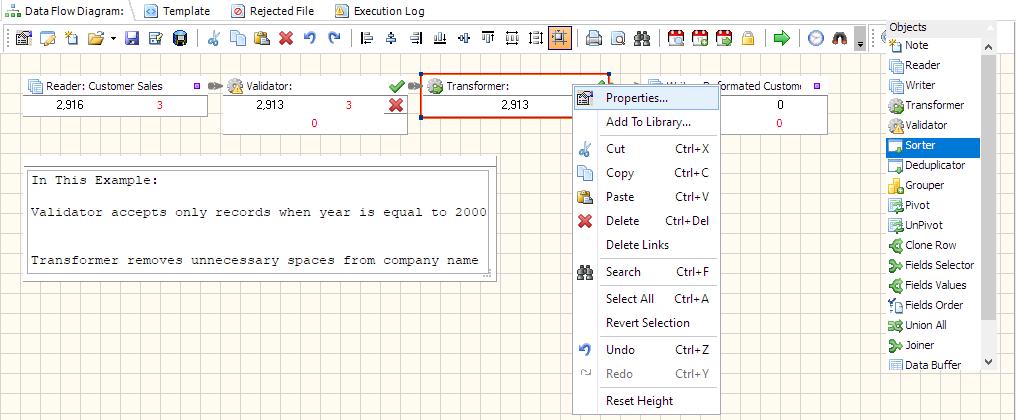
To change object properties double click on it.

Automatic Version Control
Each time the Save button is pressed, the transformation is automatically added to the version control
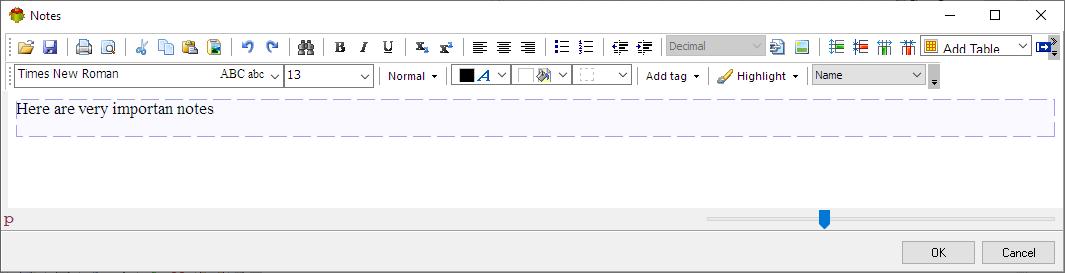
Notes Dialogue
Incremental search
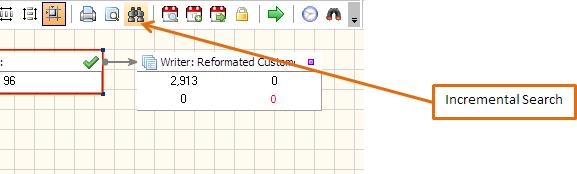
The incremental search dialogue provides a convenient way of locating transformation objects to the end-user within complex data mappings.

Video Tutorials
For more technologies supported by our ETL Software see Advanced ETL Processor Versions
Confused? Ask question on our ETL Forum