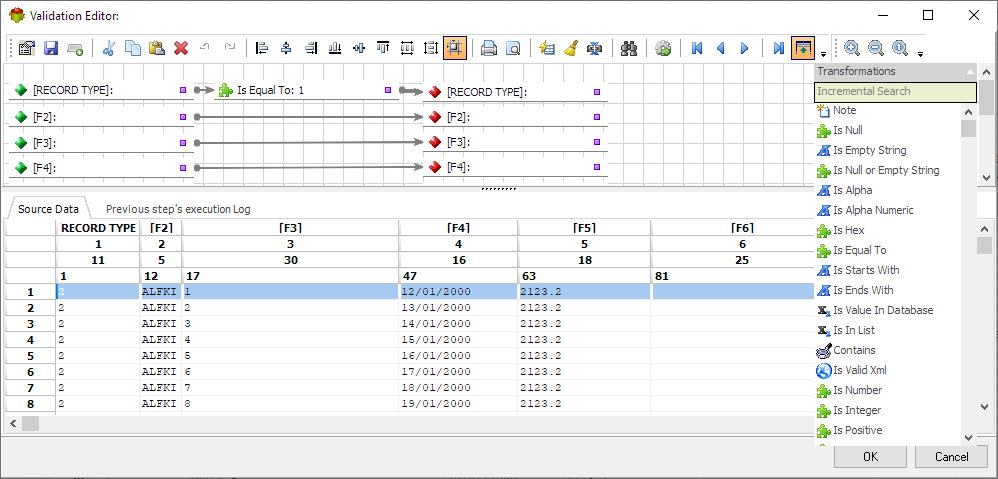
Use equality checks for reconciliation
Equality validation is useful when the same value appears in two places. For example, a source total matches the calculated line total, or a copied field matches the original after transformation.
When values do not match, Advanced ETL Processor logs the row and stops it from reaching the target. That is better than finding the mismatch after the dashboard has already emailed half the company.
Common equality checks
- Header totals compared with detail line totals.
- Source values compared with transformed values.
- Control totals between files and database loads.
- Fields repeated across related records.
When equality is too strict
For decimal values, dates, and generated timestamps, exact equality is often too rigid. Use range or tolerance checks when tiny differences are expected. Computers are precise. Business data is often wearing a slightly different hat.
Useful references
Related material: working with large lists of values, data validation types, and Oracle's notes on comparison conditions.