ETL Software for Logistics Companies: Build Reliable, Self-Hosted Data Pipelines
If your logistics stack includes a mix of TMS, WMS, ERP, vehicle telematics, route optimization, and EDI feeds from carriers and partners, you already know the pain: brittle scripts, inconsistent file layouts, and delays when someone changes a column name. A robust ETL layer standardizes this flow-extracting from every source, transforming data to a clean model, and loading it into your warehouse or operational databases. I recommend evaluating the self-hosted Advanced ETL Processor for this job: it’s fast to deploy, easy to automate, and built for complex logistics data.
Why ETL Matters in Logistics
Logistics data is high-volume, time-sensitive, and fragmented across systems and partners. Your ETL layer ensures every team-from dispatch to finance-works from the same truth.
- Unify data across WMS, TMS, ERP, telematics, and EDI 204/214/990 messages.
- Normalize units of measure, time zones, and geospatial formats.
- Feed AI driven ETA predictions, capacity planning, and anomaly detection with reliable features.
- Publish curated views for BI tools and operational dashboards without manual exports.
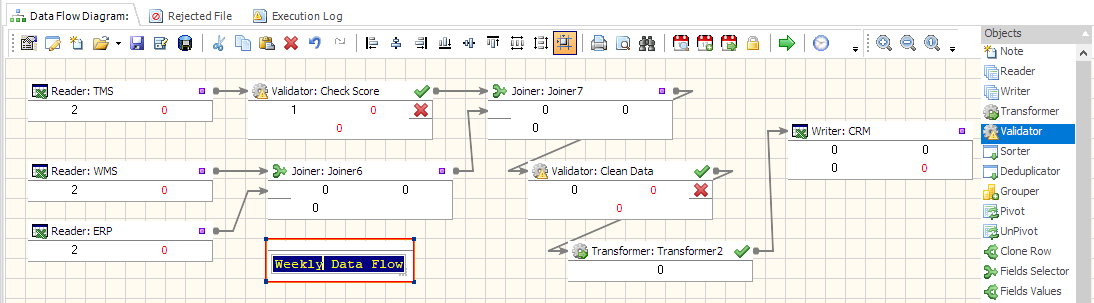
Self-Hosted for Control, Cost, and Compliance
- Security & Privacy: Keep route, customer, and pricing data on-prem or within your VPC.
- Predictable Costs: Avoid per-row or per-API pricing spikes during peak season.
- Operational Control: Schedule loads around cut-offs and warehouse shifts, with safe maintenance windows.
Why Advanced ETL Processor
Advanced ETL Processor is a self-hosted data integration platform that fits logistics workloads without the overhead of custom code everywhere. It’s visual where you want speed, scriptable where you need power, and rock-solid for scheduling.
- Wide Connectivity: Databases (MySQL, PostgreSQL, SQL Server, Oracle), flat files (CSV, Excel), APIs, SFTP, and EDI flows.
- Visual Transformations: Map, validate, enrich, and cleanse without fragile one-off scripts.
- Automation & Scheduling: Orchestrate nightly full loads and intraday increments with retries and alerts.
- Data Quality Gates: Quarantine bad rows, enforce referential integrity, and log root causes.
- AI-Ready Pipelines: Standardize features for ETA prediction, exception detection, and demand forecasting-without sending PII or sensitive rates to third parties.
- Lineage & Auditability: Track transformations end-to-end so ops and finance can trust the numbers.
Typical Logistics Use Cases
- Shipment Visibility: Join EDI 214 status updates with telematics pings and traffic data for real-time ETAs.
- Warehouse Performance: Combine WMS picks, docks, and cycle counts with labor shifts for throughput KPIs.
- Freight Audit & Pay: Normalize invoices, match to contracts, and flag anomalies before payment.
- Carrier Scorecards: On-time performance, claims rate, and cost-to-serve rolled up by lane and mode.
- AI/ML Features: Feature store for lane-level transit variance, seasonal patterns, and exception likelihood.
Reference Architecture
- Extract: Pull from TMS/WMS/ERP databases, SFTP drops, EDI feeds, and telematics APIs.
- Transform: Standardize entities-Shipments, Stops, Orders, Containers, Carriers, Equipment, Events-apply UOM conversions, geocoding, and time-zone normalization.
- Load: Land into an operational store and a reporting warehouse with curated, documented views.
- Use watermarks (e.g., updated_at) for incremental loads to keep latency low.
- Normalize locations with consistent geocoding; store UTC, display local time.
- Version rate tables and routing rules-audits and “why did this rate apply?” are inevitable.
- Keep a robust error quarantine with reason codes to avoid silent data drift.
Getting Started in 3 Steps
- Install & Connect: Deploy Advanced ETL Processor on your server and connect to TMS, WMS, ERP, and SFTP/EDI endpoints.
- Model & Validate: Map core entities (Shipments, Orders, Stops, Events) and add data quality checks for UOM, IDs, and referential integrity.
- Automate & Monitor: Schedule increments, set alerting on failures/slowness, and publish curated views for BI and AI workloads.
Business usage examples
Operations lead
Coordinate multi-source logistics data in one scheduled ETL workflow.
Planning analyst
Track fulfillment, delays, and stock metrics from validated inputs.
Platform owner
Monitor runs, retries, and handoffs across distributed systems.
Video walkthrough
Stop struggling with fragile ETL scripts. Start shipping reliable workflows.
Download the fully functional 30-day trial. Build your first automation in 10 minutes or less.
Direct link, no registration required.