Data Warehousing: A Practical Guide
Data warehousing gives you one consistent place for historical business data so reporting and analytics stop arguing with each other. The practical model is still ETL: extract, transform, load, then validate. You can build this in Advanced ETL Processor Enterprise with scheduled workflows and repeatable mappings.
What data warehousing is in plain English
A data warehouse is a system built for analysis, not day-to-day transactions. It combines data from multiple sources, standardizes it, and keeps history so teams can compare trends over time.
Think of it as a calm archive for analytics, while operational systems keep handling live business activity. One system sells the product. The other explains what just happened and what might happen next.
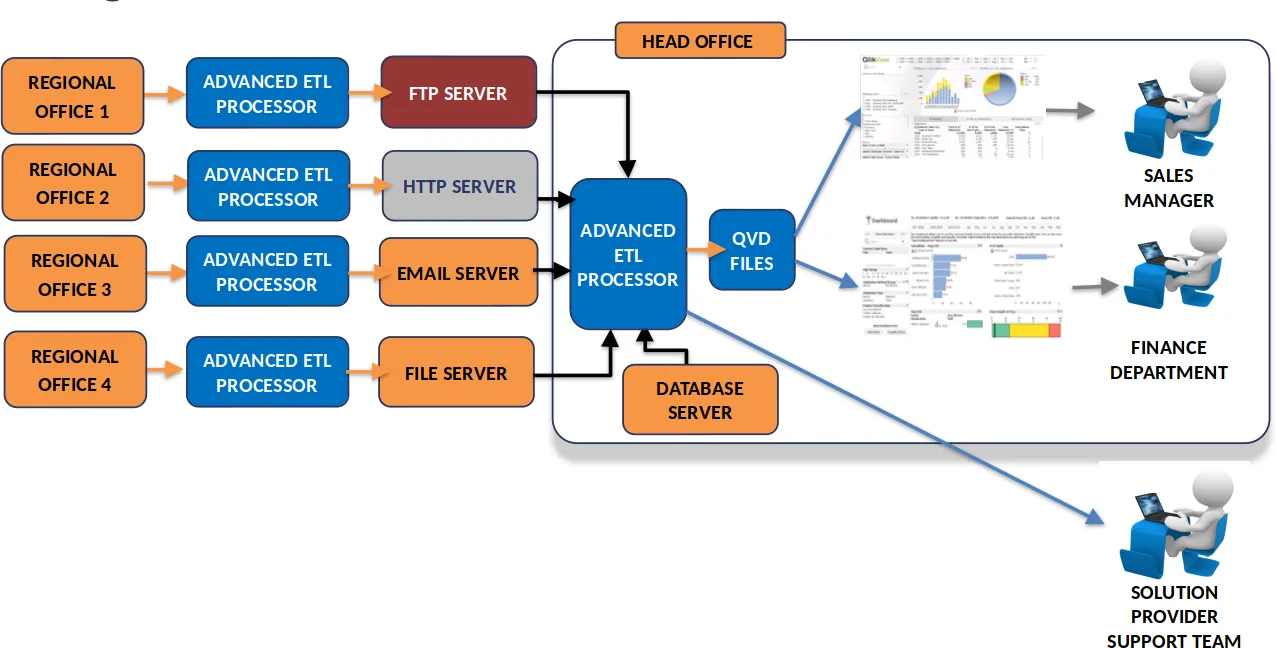
The three stages that still matter in warehouse pipelines
Extract
Collect source data from databases, files, APIs, and other systems with stable connectors and predictable schedules.
Transform
Clean, standardize, validate, and model data into business-ready structures. This is where most quality gains happen.
Load
Write data into warehouse targets using incremental strategies and reconciliation checks so reports stay trustworthy.
Shared topic across top guides: architecture choices drive long-term cost
Most comprehensive guides agree on the same pattern: define workload first, then choose architecture. Query-heavy analytics, near real-time feeds, and strict governance all influence how you design storage, transforms, and refresh cycles.
Semantic consistency beats tool choice
Teams often debate platforms but skip shared business definitions. If one department defines “active customer” differently, dashboards diverge even with perfect ETL execution.
Rule of thumb: establish metric definitions before optimizing SQL.
Test recoverability, not only query speed
A warehouse pipeline should recover cleanly from partial failure. Checkpointing, rerun safety, and exception routing matter as much as fast load times.
One story from project reality
A finance team moved from spreadsheet reconciliation to a scheduled warehouse load. Their biggest win was not flashy dashboards. It was arriving each morning to the same trusted numbers, produced the same way every run.
One practical view after many warehouse projects
The cheapest-looking warehouse plan is usually the one that becomes expensive first if governance and testing are postponed.
Related links and references
FAQ
What is the main purpose of a data warehouse?
To provide a centralized, historical, analysis-ready data store for reporting, BI, and strategic decision-making.
Is ETL still relevant for modern warehousing?
Yes. Even when tools use ELT patterns, extraction quality, transformation logic, and load governance still determine outcomes.
How often should warehouse data refresh?
It depends on business need. Some teams refresh nightly, others hourly, and some near real-time for operational analytics.
When should a company avoid a full warehouse project?
If reporting needs are small and temporary, a simpler approach may be enough. Warehouses make the most sense for recurring cross-system analysis.