ETL vs ELT: Understanding the Key Differences
ETL transforms data before loading, while ELT loads first and transforms inside the target platform. In most cases, ETL is better when control and data quality come first, and ELT is better when you need scale and speed. If your team wants a visual, repeatable ETL workflow, you can build it in Advanced ETL Processor Enterprise without scripting.
If your source files feel like they are getting out of column, you are not alone. The core decision is simple: where should transformation happen, and who owns data quality checks at each stage.
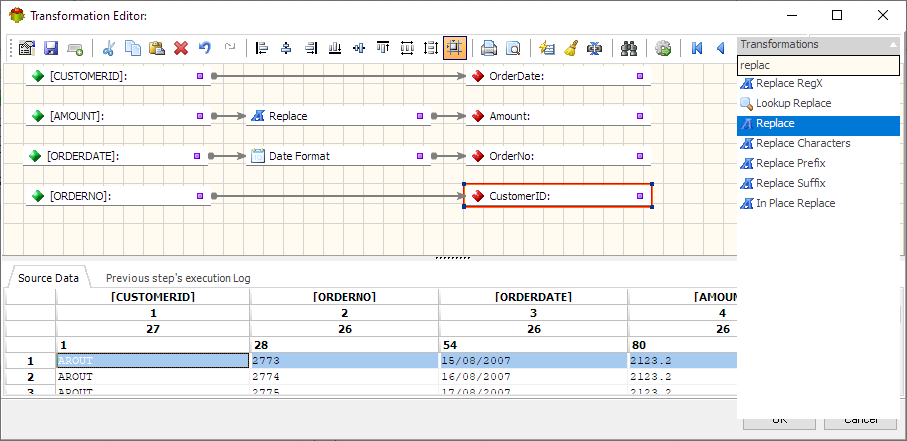
The shared definition every top guide agrees on
ETL means extract, transform, load. ELT means extract, load, transform. Both patterns move data from source systems to analytics destinations such as warehouses and lakes. The practical difference is transformation timing and execution location, as explained in references from AWS and IBM.
ETL vs ELT in practice
Choose ETL when governance is non-negotiable
ETL is usually the safer fit for regulated reporting, legacy systems, and teams that need strict validation before data lands in analytics tables.
Choose ELT when platform compute is your advantage
ELT is often the better fit when your warehouse can handle heavy SQL transforms and your analysts need rapid iteration on raw and semi-structured data.
Use hybrid patterns when reality is messy
Many teams use ETL for sensitive domains and ELT for high-volume exploratory data. That is normal, not indecision.
Key differences that change cost and delivery speed
- Transformation point: ETL before load, ELT after load.
- Data quality gate: ETL catches issues earlier, ELT requires strong post-load controls.
- Performance model: ETL depends on integration engine capacity, ELT depends on warehouse compute.
- Team skills: ETL favors workflow tooling, ELT often needs stronger SQL and platform engineering.
- Cost profile: ELT can be fast to start but expensive if queries and scans are not controlled.
That list sounds obvious, but this is exactly where projects drift. Teams choose ELT for speed, then discover no one defined transformation ownership. Or teams choose ETL for control, then under-size the transformation tier and blame the design instead of capacity planning.
In practice, you should treat ETL/ELT as an operating model decision, not only a technical one. Ask who writes transformations, who approves schema changes, and who gets paged when quality checks fail at 2:13 a.m. The architecture usually reveals itself after those three answers.
A simple decision matrix you can use this week
Pick ETL first when you need controlled data contracts
If your downstream teams expect stable curated tables and strict validation rules, ETL gives you a cleaner gate. This is common in finance, regulatory reporting, and any environment where failed checks must stop data publication.
Pick ELT first when analytics velocity matters most
If analysts iterate quickly, data sources change often, and your warehouse compute is strong, ELT can shorten cycle times. Load raw data early, then iterate transformations in SQL with version control and test suites.
Pick hybrid when source maturity differs by domain
Customer master data may need ETL-style controls while clickstream or telemetry domains fit ELT exploration. Treat each domain by risk profile, not by trend. One-size-fits-all pipelines usually become nobody-is-happy pipelines.
Implementation checklist before you lock architecture
- List required refresh windows: hourly, nightly, or near real-time.
- Define hard quality checks: null thresholds, type conformance, reconciliation rules.
- Estimate data growth for 12 months, not just current volume.
- Identify who owns failed-job triage and rerun procedures.
- Decide where business logic should live: ETL layer, warehouse SQL, or both.
- Run a sample pipeline end-to-end before scaling.
The good news is this can be done quickly. Start with one source, one target, one validation policy, and one daily schedule. Expand only after success is repeatable.
Testing strategy should drive the architecture
Most comparison posts explain process order but skip testing depth. Rule of thumb: define validation checkpoints first, then pick ETL or ELT. If you cannot prove row counts, type conformity, and reconciliation outcomes, the pipeline is still guesswork.
For ETL, put validation before final load and fail fast on critical issues. For ELT, validate both raw landing and transformed models, then publish only tested outputs. Either way, test evidence matters more than platform marketing pages.
When not to use either pattern
If your data volume is small, source formats are stable, and reporting is ad hoc, a lightweight export plus a clean SQL model may be enough. Not every team needs a full pipeline on day one.
Tell people this early and you save everyone time. A weekly CSV export with a clear naming standard can be the right answer for a small team. You can always grow into ETL or ELT when complexity actually appears.
One short story from support
A team once told us their ELT flow was "broken." The issue turned out to be one N/A value inside a date column. One value, one nightly failure, one very unhappy morning. The simplest fix was adding validation before scheduling. Nine times out of ten, that is still the right first move.
One practical opinion
"Free" tools are rarely free once rework and support delays start piling up. If your integration is business-critical, predictable execution and direct support usually beat clever architecture diagrams.
That is especially true when operations teams inherit the workflow. A brilliant prototype that only one person can maintain is a fragile asset. A boring, documented, repeatable workflow is usually the one that survives audits, handovers, and staff changes.
How we usually start ETL vs ELT projects
We start with a pilot that includes one representative source, one target, and explicit quality checks. Then we run it on realistic samples, schedule it, and observe failure modes. If the process fails gracefully and recovers cleanly, we scale. If not, we adjust design before adding more systems.
This avoids the classic mistake of building a large architecture diagram before proving operational behavior. Pipelines do not fail on slides. They fail on Tuesday at 6:40 a.m. when someone renamed a column.
Related links and references
FAQ
Is ETL or ELT better for data quality?
ETL usually gives stronger early quality control because transforms and validations happen before loading into analytics targets.
Is ELT always cheaper in the cloud?
Not always. ELT can reduce setup friction, but compute-heavy transformations and repeated large scans can increase ongoing costs.
Can ETL and ELT coexist?
Yes. Many teams use ETL for governed datasets and ELT for exploratory or high-volume workloads.
How do I choose quickly?
Start with compliance, data quality, and refresh-time requirements. Then evaluate team skills and expected compute costs.